
Industries today are facing changes in which speed along with flexibility and efficiency are no longer a luxury, they are essential. The old infrastructure, which was costly and difficult to upgrade, cannot meet the demand for distributed and real-time analytics. ScalerPi introduces a fresh perspective by combining edge computing and practical engineering to deliver solutions that truly can scale.
The Raspberry Pi is at the center of this revolution, allowing companies to reconsider their methods of designing and governing systems. Instead of being dependent on large, centralized hardware, businesses are now able to implement lightweight but powerful devices that work directly on the spot where data is created. This approach reduces time to market and allows teams the ability to react immediately to the changing environment.
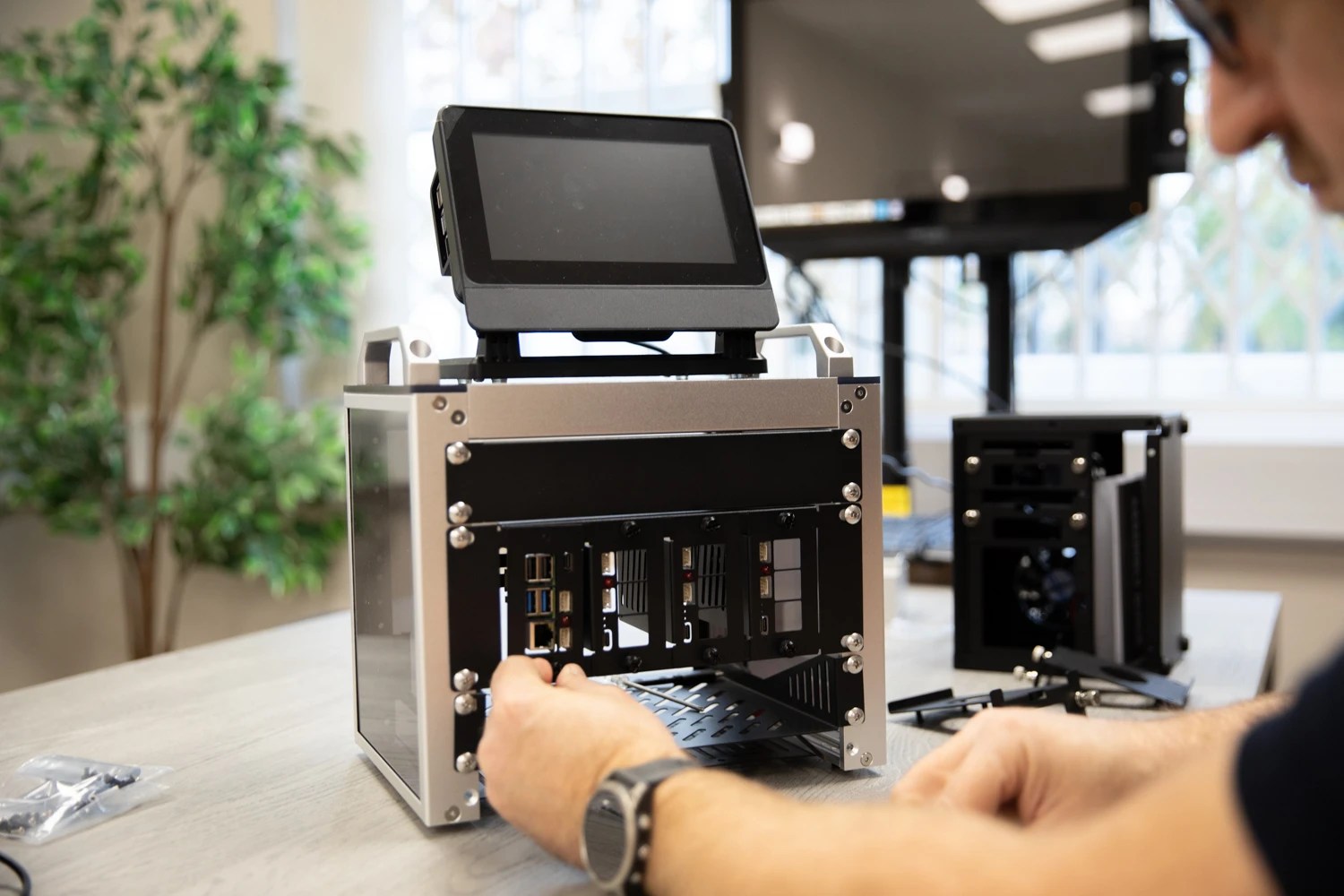
Data-driven Action at the Edge
The capability to process information locally is the primary benefit of edge computing. Waiting for cloud-based solutions to perform in various industrial settings is not feasible. ScalerPi solves this problem with an infrastructure that is able to be operated independently, but also being able to connect with larger systems when required.
The most important component of this setup is the industrial Raspberry Pi IoT gateway, which acts as the central link between devices and applications. It enables seamless communication between sensors, software, and machinery platforms. It’s possible to monitor the processes in real time, spot problems in the early stages and ensure consistency across different locations.
This capability can have a profound impact on industries such as logistical and environmental monitoring. Systems are able to continue operating even in low-connectivity or remote areas, assuring that operations remain in full swing and data is always accessible.
Compact Power for Demanding Environments
In the field of industrial computing, balancing performance with practicality is one of the biggest challenges. Big servers may provide the power, but they typically have high prices along with energy consumption, and limited flexibility. ScalerPi solves this issue with industrial Raspberry Pi servers that deliver solid computing in a compact form, with a low energy consumption.
These servers were designed to operate in real-world conditions where space and power are very limited. Whatever the situation, whether they’re deployed in a manufacturing facility or retail outlet, or a remote monitoring station, these servers offer steady performance, removing the need for an extensive infrastructure. The modularity of their systems allows for gradual expansion allowing businesses to align growth with the needs of the moment.
Taking this a step further, the compact industrial Raspberry Pi compute module server has even greater flexibility. These servers, designed for extreme conditions, feature durability and advanced processing abilities. These servers are great for applications that need to operate continuously, such as smart city systems, industrial automation setups.
Flexible Deployment Through Containerized Delivery
Modern infrastructure must be adaptable which is where containers play a crucial role. ScalerPi integrates industrial Raspberry Pi docker environments to enable flexible and efficient application management. With Docker, businesses can deploy applications, update and scale applications quickly without disrupting ongoing operations.
This technique simplifies the development process and ensures uniformity across different deployments. Applications can be tested on one platform and easily transferred to another, reducing the chance of making mistakes and improving overall reliability. For businesses that have several sites, this kind of control is invaluable.
Containerization helps in the process of innovation. Teams can test new features or services without affecting existing systems, which makes it easier to keep up with the competition in industries.
Practical Solutions in multiple sectors
ScalerPi’s greatest strength is its adaptability to different industries. In the field of manufacturing industrial automation, the Raspberry Pi enables automated maintenance, which helps reduce downtime and improve efficiency. The machines can transmit and share information to create a unified and intelligent working environment.
In the field of agriculture, edge technologies help farmers adopt more efficient farming practices. Sensors monitor the weather conditions, soil conditions, and crop health, making it easier for farmers to make informed decisions that improve yields as well as conserve resources.
The hospitality and retail sectors gain real-time insight into the behavior of customers. Companies can enhance the experience of their customers by enhancing their operations. This includes digital signage and queue management. Public sector projects like smart cities make use of cutting-edge technology for tasks such as environmental monitoring and asset tracking.
Connecting Hardware and Cloud securely
What makes ScalerPi different is the ability it has to bridge the gap between physical devices as well as cloud-based systems. It creates a single platform that combines hardware expertise with the latest cloud technology.
The result is that businesses can expand without adding more complexity. The infrastructure can be managed, cost-effective and secure whether you start with a small installation, or grow to thousands of devices. Transparent pricing, modular design and user-friendly make the process of deployment easier. This enables organizations to focus on innovation rather than operations-related issues.
Industrial Technology: A Future-Ready Approach
The need for an efficient and adaptable infrastructure will continue to increase as industries change. ScalerPi is a solution which is able to meet these needs by combing the power of cutting-edge computing with the flexibility of Raspberry Pi technology.
Every component, from industrial Raspberry Pi servers to advanced IoT gateways and containerized applications is designed to ensure flexibility and scalability. The infrastructure is designed to not only accommodate the current requirements, but also prepare businesses for future challenges.